 How-to
How Long Does a Bathroom Remodel Take Week by Week
Last Updated: November 10, 2026
Quick Summary
A bathroom remodel timeline usually runs about one to two weeks for a cosmetic refresh, three to five weeks for a mid-size remodel, and six to ten weeks for a full remodel that keeps the same layout. Pre-construction planning, permits and special-order materials can add two to four months before work starts.
- A cosmetic refresh without moving plumbing typically takes about 1 to 2 weeks.
- A full remodel keeping the same layout typically takes about 6 to 10 weeks.
- Special-order tile or fixtures are a common cause of delays.
- Hidden water damage found during demolition often adds weeks to the project.
- Build a one- to two-week buffer into your plan to absorb small delays.
Table of Contents
- How Long a Bathroom Remodel Takes by Project Scope
- How Long Does a Small Bathroom Remodel Take
- Pre-Construction Lead Time: Planning, Design and Permits
- Do You Need a Permit to Remodel a Bathroom
- Week-by-Week Sample Schedule for a Full Bathroom Remodel
- How Long It Takes to Remodel a Shower and Tub Conversion
- Can a Bathroom Remodel Really Be Done in 5 Days, and What Delays to Expect
- Plan Your Bathroom Remodel Timeline With Revo Kitchen and Bath
- Frequently Asked Questions
How Long a Bathroom Remodel Takes by Project Scope
A bathroom remodel usually takes anywhere from one week to about ten weeks of construction, depending on how much work the room needs. Scope matters most. A simple cosmetic update moves quickly, while a full remodel that changes the layout takes much longer.
Every project is different, so treat these ranges as planning guidance rather than promises.
South Shore Custom Builders 2026 timeline estimates by remodel scope puts a cosmetic refresh at about one to two weeks, a mid-size remodel at three to five weeks, and a full remodel that keeps the same layout at six to ten weeks.
Cosmetic refresh timelines
A cosmetic refresh replaces surfaces and fixtures without moving plumbing or walls. Think new vanity, new tile on the shower walls, updated lighting, and a fresh coat of paint.
- Typical duration: about 1 to 2 weeks
- Common work: vanity swap, tile resurfacing, faucet and fixture updates
- Main delay risk: waiting on special-order tile or fixtures
Mid-size and full remodel timelines
A mid-size remodel usually adds new plumbing locations or a different shower layout. A full remodel changes the room from the studs out.
- Mid-size remodel: about 3 to 5 weeks
- Full remodel, same layout: about 6 to 10 weeks
- Full remodel with layout changes: often longer, because framing and permits add steps
Build With Inspiration 2026 bathroom remodel timeline guide separates active construction from the full project. That distinction matters for planning, so we cover it in the sections below.
Bathroom remodel duration by project scope
How Long Does a Small Bathroom Remodel Take
A small bathroom, such as a half-bath or a compact guest bath, often moves faster than a larger room. Fewer square feet means less demolition, less tile, and fewer fixtures to install.
A small bathroom remodel generally takes less construction time than a larger room, depending on plumbing changes and access. The exact time depends on whether the tub or shower is being replaced and whether plumbing moves.
Small rooms can still stall. Tight access makes demolition slower, and a crew working in a cramped space may need more days for the same tasks.
Pre-Construction Lead Time: Planning, Design and Permits
Most homeowners plan for the on-site work and forget the weeks before the first tool comes out. That pre-construction period is separate from the build, and it often takes longer than the construction itself.
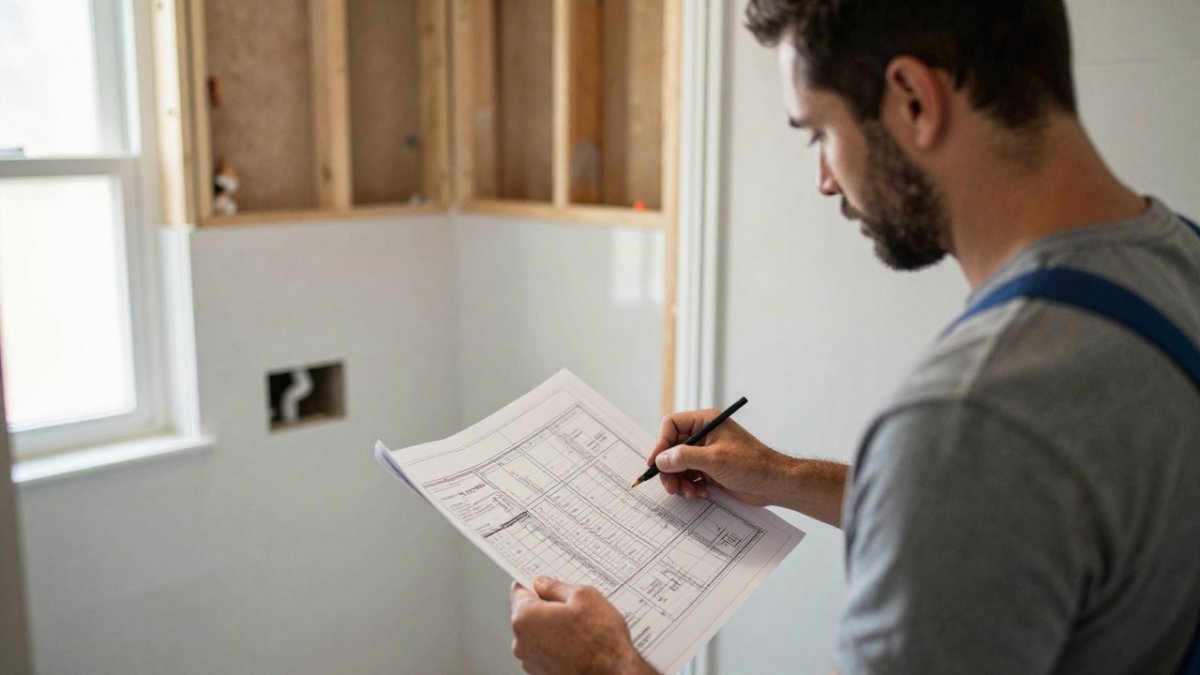
The first stage is the site visit and written scope of work. A contractor typically needs one to two weeks to schedule the visit, measure the room, and produce a written proposal. If the scope changes after the proposal is signed, the pricing and schedule both need to be revised.
Design decisions come next, and they set the critical path. Tile, vanity, shower glass, and fixtures should be selected before any material is ordered. Homeowners who finalize these choices early avoid the most common pre-construction delay. Changing a tile or faucet after ordering can add weeks while the replacement ships.
Special-order items carry the longest lead times. Custom vanities, certain tile lines, and specialty shower glass can take several weeks or more to arrive, depending on the manufacturer. Ordering these items as soon as they are selected, and confirming delivery dates in writing, prevents the crew from standing idle when it is ready to start.
Permits run alongside material ordering. Plumbing and electrical changes usually require an application, a plan review, and then inspections during construction. The review period varies by local office and can take days or several weeks. Submitting a complete application with accurate drawings avoids resubmission, which is a frequent cause of delay.
Contractor availability is the last factor. A reliable crew may be booked several weeks out, so the start date can depend on when the schedule opens rather than when the homeowner is ready.
A useful way to plan is to count backward from the desired finish date. Subtract the construction duration, then add the permit review window and the longest lead-time material. The result shows when selections must be final.
Homeowners can shorten this period by finalizing selections before the proposal is signed, submitting permit applications as soon as drawings are complete, and confirming every delivery date before work is scheduled to start.
Do You Need a Permit to Remodel a Bathroom
Often, yes. Permit rules vary by city and county, so check with your local building department before work begins. Plumbing and electrical changes almost always require a permit, while a simple cosmetic update may not.
Permits add time. Plan for review and inspection stages, which can add days or weeks depending on the local office.
Week-by-Week Sample Schedule for a Full Bathroom Remodel
A full remodel that keeps the existing layout typically runs about six to ten weeks of on-site work. The sequence below shows a realistic build for that scope. Each phase depends on the one before it, and several steps pause while the crew waits on an inspection, a delivery, or a cure time. Those waiting periods are where most schedules lose time, so they are shown explicitly.
-
Week 1: Demolition and debris removal. The crew removes the vanity, tub or shower surround, toilet, flooring, and wall finishes. Expect three to five workdays. Once the walls are open, the crew checks for water damage, soft subfloor, and rot. Anything found here can add days before the next step can begin.
-
Week 2: Framing repairs, rough plumbing, and rough electrical. Framing repairs come first, then the plumber and electrician run new lines to the approved locations. Rough-in work usually takes three to five workdays. This phase depends on the design being final, because moving a drain or adding a circuit after this point means reopening walls.
-
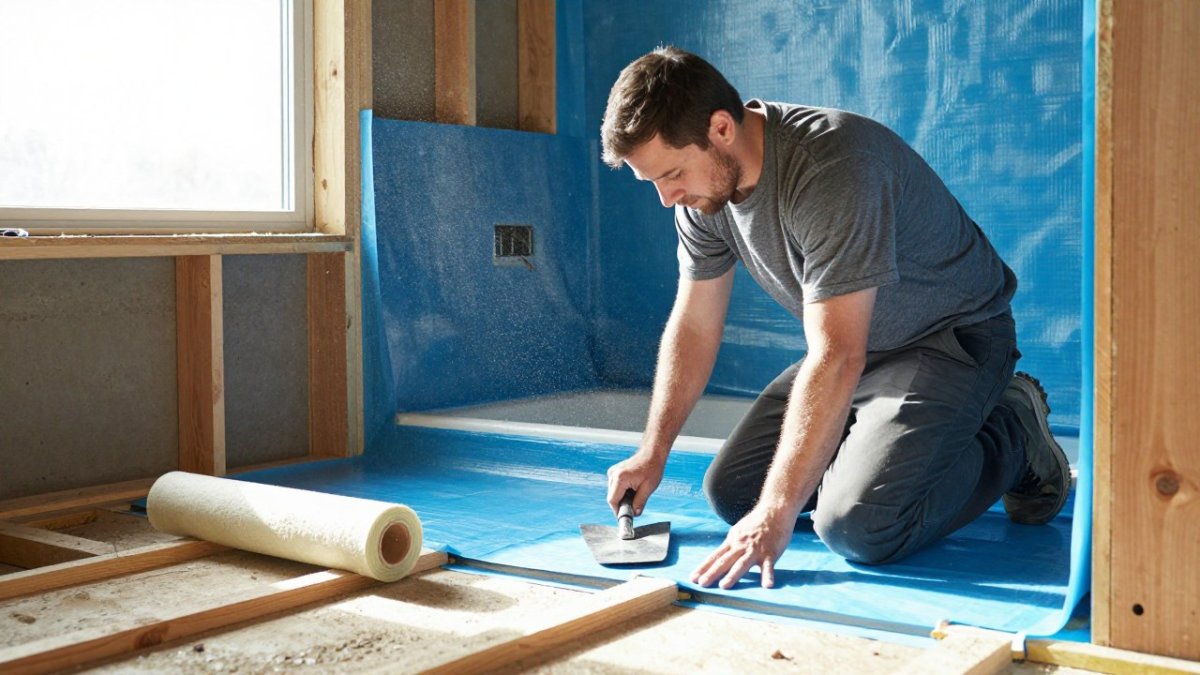
Week 3: Rough inspections and waterproofing. The building inspector reviews the open framing, plumbing, and electrical before anything is covered. Scheduling this inspection is a common waiting period, and a failed inspection sends the crew back to correct the work before covering it. After approval, the crew installs the cement board or waterproof wall panels and applies the membrane at the shower and tub area. Membranes often need a cure time before tile can go on, so this phase may stretch past the scheduled week.
-
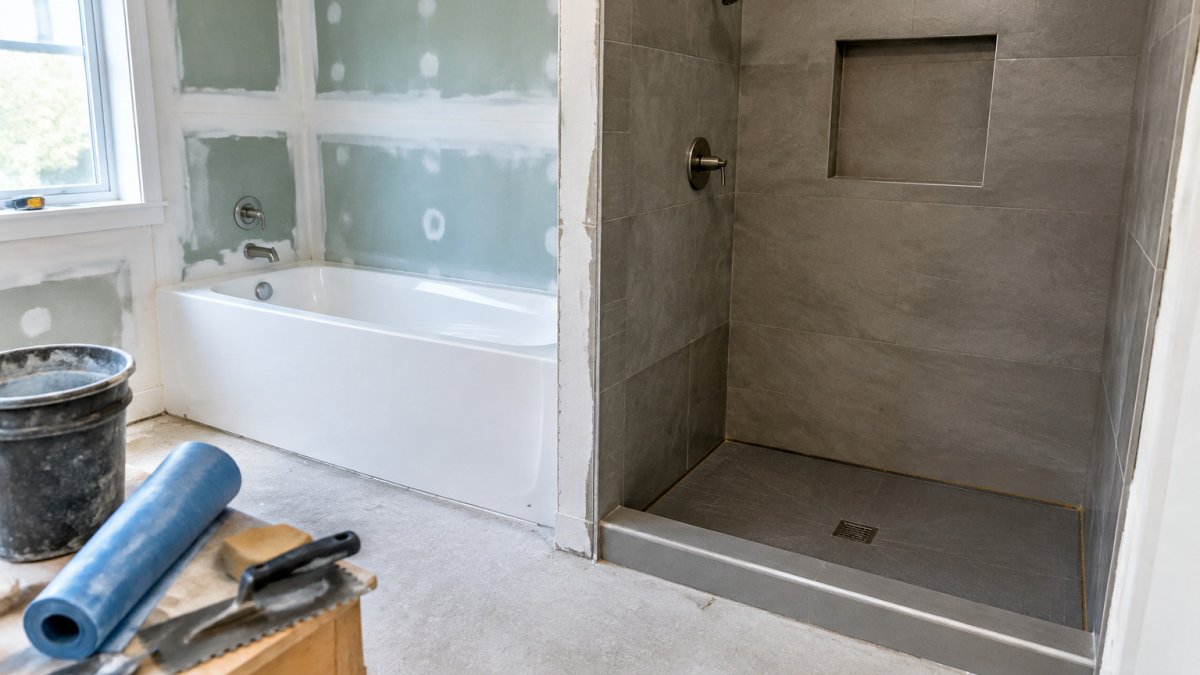
Week 4: Tile installation for shower and floor. Once the substrate is cured and dry, tile goes in. Floor tile is typically set first, then shower walls, then grout after the thinset has set. Grout and sealing need their own curing time before the room is used, so expect a short pause before the vanity and fixtures can be installed.
-
Week 5: Vanity, toilet, tub or shower fixtures, and trim. These items depend on tile being complete and grout being cured. Fixtures that were special-ordered should be confirmed on site before this week starts. A missing faucet or shower valve trim is one of the most common reasons this phase slips by several days.
-
Week 6: Paint, final fixtures, cleanup, and final inspection. Painting and finish trim come after fixtures are set so the walls are not damaged during installation. The final inspection is scheduled once the room is complete, and any punch-list items are corrected before the crew leaves.
This sequence assumes materials arrive on the scheduled date and no hidden damage appears behind the walls. In practice, a single late delivery or failed inspection can push the finish date back by one to two weeks. Build that buffer into the plan from the start.
Watch out: Hidden water damage found during demolition is the most common cause of added weeks, so ask the contractor how they will handle it before work begins.
The sequence below lays out the weeks of a full remodel that keeps the existing layout, with the waiting periods that most often add time.
| Week | Main work | Waiting period or risk |
|---|---|---|
| 1 | Demolition and debris removal | Hidden rot or water damage |
| 2 | Framing repairs, rough plumbing and electrical | Design changes mean reopening walls |
| 3 | Rough inspections and waterproofing | Inspection scheduling and membrane cure time |
| 4 | Tile installation for shower and floor | Thinset and grout curing |
| 5 | Vanity, toilet, tub or shower fixtures and trim | Late fixture or valve trim delivery |
| 6 | Paint, final fixtures, cleanup and final inspection | Punch-list corrections |
How Long It Takes to Remodel a Shower and Tub Conversion
A tub-to-shower conversion still requires careful waterproofing.
FIBO wall panels are waterproof and durable, giving a low-maintenance surface for shower conversions.
Can a Bathroom Remodel Really Be Done in 5 Days, and What Delays to Expect
Full bathroom remodels are not realistic in five days. A simple shower or tub replacement with pre-ordered materials and no layout changes is the kind of job that can move faster.
Common delays include:
- Hidden rot or water damage found after demolition
- Special-order tile or fixtures arriving late
- Inspection scheduling and failed inspections
- Changes to the design during construction
Build a buffer of one to two weeks into your plan. That cushion keeps a small delay from becoming a major disruption.
Plan Your Bathroom Remodel Timeline With Revo Kitchen and Bath
A clear timeline starts with a clear scope. Revo Kitchen and Bath, led by a third-generation builder with more than 30 years of hands-on experience, can help homeowners plan their project.
If you want a realistic bathroom remodel timeline for your home, request a free quote from Revo Kitchen and Bath.
Watch out: Hidden water damage is the most common reason a bathroom remodel runs longer than planned, so ask about inspection before demolition.
Frequently Asked Questions
How long does a bathroom remodel take? Timelines vary by scope, so a cosmetic refresh, a mid-size remodel and a full remodel each take a different amount of time. Planning and permits add more time before work starts.
How long does a small bathroom remodel take? A small bathroom remodel commonly takes about two to four weeks of construction, depending on plumbing changes and access.
Do you need a permit to remodel a bathroom? Plumbing and electrical changes often require a permit. Requirements vary by local jurisdiction, so check with your building department.
Can a bathroom be remodeled in 5 days? Only simple jobs, such as a basic shower or tub replacement with materials already on site. Full remodels take longer.
Frequently Asked Questions
What is the average time it takes to complete a bathroom remodel?
Construction time depends on scope, and the complete project also includes planning, design and material ordering. Cosmetic refreshes take less time than mid-size or full remodels. Timelines depend on scope, material availability, permit approval and how quickly decisions are made during construction.
How long does a small bathroom remodel take?
A small bathroom remodel, such as a half-bath or a compact full bath with no layout changes, often moves faster than a larger room. Because the room is smaller, demolition and installation move faster, but plumbing and electrical rough-in still need inspection before walls are closed. Planning and ordering fixtures can add several weeks before work begins, so the full schedule is usually longer than the construction phase.
Do you need a permit to remodel a bathroom?
Many bathroom remodels require a permit, particularly when plumbing, electrical circuits, ventilation or structural walls are changed. Cosmetic work such as replacing a vanity, fixtures or flooring without moving pipes often does not. Requirements are set by the local building department, so check with your city or county before scheduling work. Permit approval adds time up front, which is why it belongs in the pre-construction phase of your timeline.
What can delay a bathroom remodel timeline?
Common delays include permit review, backordered tile or fixtures, hidden water damage or mold found after demolition, and change orders when the homeowner revises the design mid-project. Failed inspections also stop work until corrections are made. Building a schedule buffer of one to two weeks for these possibilities, and making product selections before construction starts, keeps the project on track.