 Listicle
Are Waterproof Wall Panels Worth It for Showers?
Last Updated: November 7, 2026
Quick Summary
Waterproof wall panels are a practical alternative to tile for many shower renovations because they have fewer seams where water can enter. They also install faster and need less upkeep than grouted tile. Tile still wins for natural stone, custom patterns, or a historic look.
- Panels offer a continuous surface with fewer seams than tile, limiting places where water can get in.
- Panels can typically be cleaned with mild soap and water, while tile needs grout and sealing.
- Check that a panel is rated for direct shower exposure before buying, since water-resistant is not always enough.
- Panels need a sound, flat, dry substrate, and soft or water-damaged walls must be repaired first.
- Caulk at the tub lip and inside corners is the most common long-term failure point, so reseal gaps yearly.
Table of Contents
- Why Shower Walls Fail and What Waterproof Panels Change
- Shower Wall Panels vs Tile: Where Each One Wins
- Mold and Mildew Resistance in Wet Shower Zones
- Installation Benefits and Compatibility With Existing Walls
- Choosing the Best Waterproof Shower Wall Panels
- Sizing Options Including Waterproof Bathroom Wall Panels 4x8
- How Long Waterproof Shower Wall Panels Last and How to Maintain Them
- Booking a Waterproof Panel Upgrade for Your Shower
- Frequently Asked Questions
Waterproof wall panels for showers are a practical alternative to tile for many bathroom renovations. Homeowners in Southwest Washington often choose them because they resist moisture, install faster than tile, and require less upkeep. Revo Kitchen and Bath, a remodeling firm led by a third-generation builder with over 30 years of hands-on experience, works with FIBO wall panels in its remodeling projects. This guide explains where waterproof panels help, where tile still wins, and how to decide whether the upgrade is worth it for your home.
Why Shower Walls Fail and What Waterproof Panels Change
Most shower wall failures start behind the surface, not on it. Water works into grout lines and cracks, then sits against the wall framing and backing board. Over time, that moisture can lead to mold, soft drywall, and costly repairs.
Waterproof wall panels use a continuous surface with fewer seams than tile, which limits the number of joints where water can enter. Fewer joints mean fewer places for water to enter. A product labeled water-resistant is not always rated for direct shower exposure, so check the manufacturer's specifications before you buy.
Shower Wall Panels vs Tile: Where Each One Wins
Tile offers unlimited design options and a classic look. It also requires grout, sealing, and skilled installation, and grout is the most common point of failure.
Shower wall panels offer a continuous surface with fewer seams and simpler upkeep. Tile may still be the better choice if you want natural stone, custom patterns, or a historic look. If you're comparing shower wall panels vs tile for a standard tub surround, panels usually make the project simpler.
The article's comparison of panels and tile comes down to a few practical differences you can scan at a glance.
| Factor | Shower wall panels | Tile |
|---|---|---|
| Seams | Continuous surface with fewer seams | Grout lines at every joint |
| Upkeep | Simpler; cleaned with mild soap and water | Requires grout and sealing |
| Design options | Limited compared with tile | Unlimited designs and classic look |
| Best for | Standard tub surround, simpler project | Natural stone, custom patterns, historic look |
| Common failure point | Seals at edges and corners | Grout |
Mold and Mildew Resistance in Wet Shower Zones
Mold needs moisture, organic material, and time to grow (the EPA). A continuous panel surface removes most of the grout lines where mildew typically starts. Panels can typically be cleaned with mild soap and water.
Resistance depends on the product and the installation. Make sure the panel is rated for shower use, and seal all edges and corners properly. Poor sealing lets water reach the wall behind the panel, which defeats the purpose.
Installation Benefits and Compatibility With Existing Walls
Panels can sometimes install over an existing tub surround or a prepared wall, though suitability depends on the substrate. But the phrase "installs over existing walls" hides the part that decides whether the job succeeds: substrate compatibility. This is where most panel projects go wrong, and it is the detail most buying guides skip.
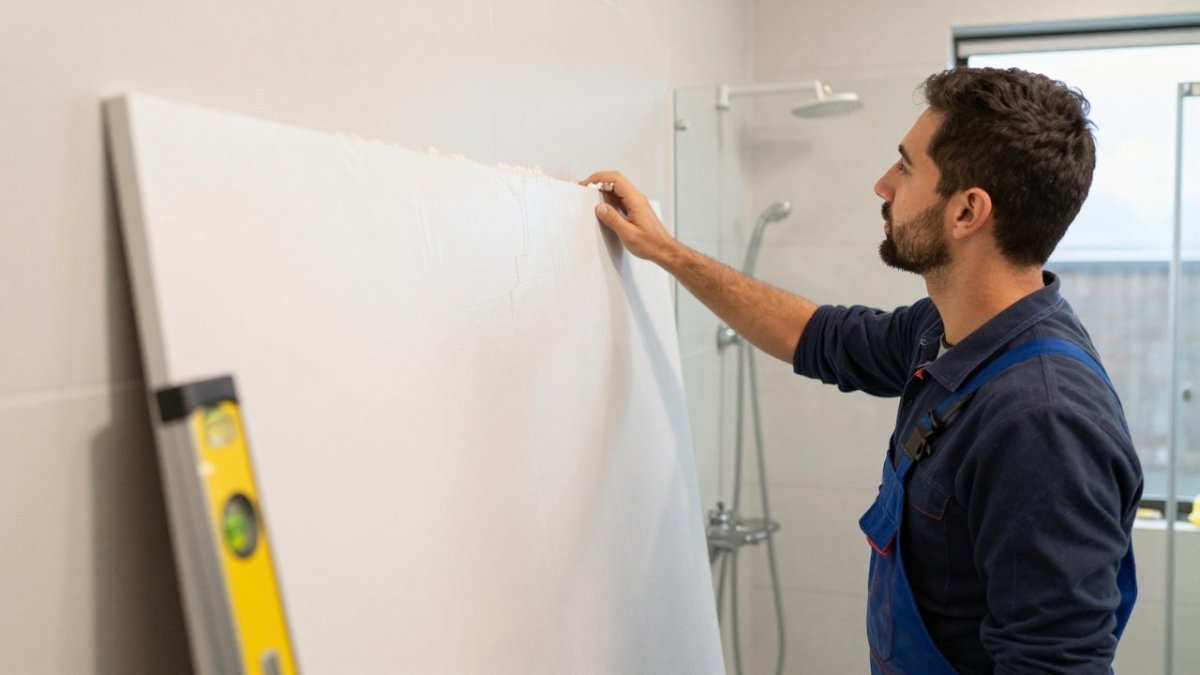
What counts as a suitable substrate. Waterproof wall panels need a sound, flat, dry, and structurally solid surface. Common acceptable substrates include cement backer board, fiber-cement board, moisture-resistant drywall in non-direct-spray zones (only if the panel system and manufacturer allow it), and properly prepared existing tile that is firmly bonded with no loose or hollow-sounding pieces. The panel manufacturer's installation instructions are the final authority, some systems require a specific backer, some allow direct adhesion to clean tile, and some require a waterproof membrane behind the panel in direct shower spray areas.
What must be removed or repaired first. Soft, water-damaged drywall, crumbling backer board, and any substrate with active mold or efflorescence must be replaced before a panel goes up. A panel is a surface, not a structural repair. If the wall moves or crumbles behind it, the seams will fail. Installers check for flatness with a straightedge; most panel systems tolerate only minor variation, and low spots or bows need shimming or patching before adhesion.
Installing over existing tile. This is the compatibility question homeowners ask most. Many panel systems can go directly over well-bonded tile if the surface is degreased, scuffed, and flat, which avoids a full tear-out and shortens the project. The trade-offs: you lose the ability to inspect what is behind the tile, you add thickness at the tub or shower pan lip (trim pieces and transition profiles handle this), and you must confirm the panel adhesive is rated for tile. If the existing tile is loose, drummy, or has failing grout with moisture behind it, tear-out is the safer path.
Plumbing and fixture layout. Confirm valve, showerhead, and grab-bar locations before ordering. Panels are cut around fixtures, and every cut is a place water can reach the substrate if it is not sealed with the manufacturer's trim or caulk. Offset or non-standard plumbing may require a panel layout change or a custom cut that affects seam placement.
When a professional assessment pays for itself. A measured site visit confirms wall condition, substrate type, plumbing layout, and tub or shower pan compatibility before any material is ordered. That step prevents the most expensive outcome: panels delivered for a wall that needs repair first.
Watch out: installing panels over a substrate that is damp, bowed, or loosely bonded may look fine on day one and fail at the seams within a season, the panel is only as good as what is behind it.
Choosing the Best Waterproof Shower Wall Panels
Look for panels with a proven record in wet areas, a warranty that covers moisture performance, and clear installation instructions. Compare color options, surface finish, and how the panel handles corners and trim pieces.
Ask Revo Kitchen and Bath about its FIBO panel options before you decide.
Sizing Options Including Waterproof Bathroom Wall Panels 4x8
Panels come in several sizes. Large sheets, such as 4x8 format waterproof bathroom wall panels, cover more area with fewer seams. Smaller panels fit awkward layouts and make cutting around fixtures easier.
Measure the wall carefully, including any niches and window openings. Account for trim and the cuts needed around valves and showerheads.
How Long Waterproof Shower Wall Panels Last and How to Maintain Them
Lifespan depends on the material, the installation quality, and how well the bathroom is ventilated. Manufacturers' warranties provide the best guide, so review the terms before purchase. Warranty terms vary by manufacturer, so review the specific terms before purchase.
Routine care that actually matters. Rinse after use, wipe with a non-abrasive cleaner monthly, and run the exhaust fan during and after showers. Check caulked seams once a year and reseal any gaps you find. Avoid abrasive pads, scouring powders, and cleaners with harsh solvents, which can dull or craze the surface finish.
Long-term troubleshooting by panel type. This is the part most guides leave out, and it is where panels earn or lose their reputation over time.
- Hard water stains and mineral film. White spotting and chalky film come from calcium and magnesium in the water. A diluted white-vinegar solution or a manufacturer-approved descaler lifts mineral film from most panel surfaces; let it dwell briefly, then rinse. Do not let acidic cleaners sit on natural-stone-look or metal-trim components, and check the panel maker's approved-cleaner list first.
- Soap scum. A mild dish soap or a non-abrasive bathroom cleaner with a soft cloth handles most scum. Avoid melamine sponges on glossy finishes, they can micro-scratch.
- Minor surface scratches. Light scuffs on solid-surface and composite panels can sometimes be buffed out with a non-abrasive polish recommended by the manufacturer. PVC and acrylic panels are harder to repair invisibly; a scratch that breaks the surface is a place water and mildew can take hold, so monitor it.
- Seam and caulk failure. Caulk at the tub or pan lip and at inside corners is the most common long-term failure point. Cut out failing caulk fully, clean and dry the joint, and reapply a mold-resistant silicone rated for wet areas. Do not caulk over old caulk.
- Loose or lifting panels. A panel that lifts at an edge usually signals adhesive failure or moisture behind it. Do not simply re-caulk over it, find out why it lifted, because trapped moisture defeats the purpose of a waterproof wall.
Ventilation is the maintenance multiplier. A working exhaust fan sized for the bathroom and run during and after showers does more to extend panel life than any cleaner. Without it, condensation sits on seams and caulk and shortens the interval between repairs.
When to call a professional. Persistent mildew at seams, soft spots behind a panel, or repeated caulk failure point to a substrate or installation issue rather than a cleaning problem. A site visit can tell you whether the fix is a reseal or a reinstall.
Booking a Waterproof Panel Upgrade for Your Shower
If you're considering a shower conversion or wall panel installation, start with a measured site visit. Revo Kitchen and Bath can review your wall condition, plumbing, and layout before providing a quote. Pricing depends on panel selection, wall condition, and project scope, so request a quote for current figures.
Get a free quote from Revo Kitchen and Bath to see whether waterproof wall panels fit your shower and budget.
Frequently Asked Questions
Are shower wall panels a good idea?
Shower wall panels are a good option for many homeowners who want a waterproof surface with less upkeep than tile. Because the panels are installed in large sheets, there are few or no grout lines for water and mold to enter. Panels can shorten installation time compared with some tile work, depending on the project. They are less suited to situations where the wall structure is damaged or where a specific handmade tile look is required. Pricing varies by material, panel size and project scope, so request a quote from Revo Kitchen and Bath for current figures.
Are shower wall panels easier to clean than tile?
Yes, in most cases. Waterproof panels have a smooth, non-porous surface, so soap scum and water spots usually wipe away with a mild cleaner and a soft cloth. Tile requires attention to grout, which can stain and hold moisture if it is not sealed and cleaned regularly. Avoid abrasive scrubbers and harsh chemicals on panel surfaces, since they can dull the finish. Follow the manufacturer's cleaning guidance for the specific product you install.
Do waterproof shower panels need grout?
Most full-sheet waterproof shower panels do not need grout between sheets. Joining methods vary by manufacturer and installer, and sealant is typically used at corners and edges. Eliminating grout removes one of the most common points where moisture gets behind tile. Sealant is still used at joints, trim and fixtures, and those areas should be inspected periodically. Confirm the exact joining method with your installer before the work begins.
Can shower wall panels be installed over existing tile?
In some cases, yes, but the existing surface must be sound, flat and securely bonded. Loose, cracked or hollow-sounding tile should be removed, because panels installed over failing tile can trap moisture and fail over time. Surface condition, the type of substrate and the panel manufacturer's requirements all determine whether overlay is appropriate. A contractor can inspect the wall and confirm whether overlaying or full removal is the better approach. Contact Revo Kitchen and Bath to discuss your bathroom.